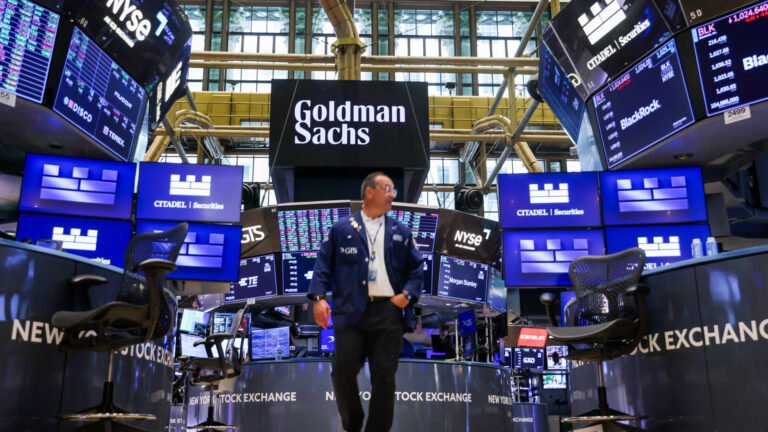





Tokenization is shaping into a foundation for the next wave of financial system development. Experts and analysts discussed it at the World Economic Forum, while major financial institutions like Deutsche Bank expect tokenization to fully take over issuance and trading in capital markets by 2030.
What does it mean for the global financial system? I believe this is a sign that a new blueprint for financial architecture is emerging. In the early stages, tokenization is likely to cover precious metals, with gold, in particular, becoming a foundational layer within the digital infrastructure.
How Tokens Become a Layer of the Financial System
To understand the significance of tokenization, let’s first recall the historical role of . A few decades ago, gold was the heart of the entire financial system, and although it has lost its formal role today, millions of investors still see it as a safe haven. This persisting trust may prove significant as the digital economy advances, with tokenization becoming a driver of this trend.
Despite the fact that modern finance is built on fiat money, people still seek assets they see as enduring and secure to store their wealth in. Of course, they can buy the physical gold (and that has traditionally been the case) but, unfortunately, even an asset with such a long history has flaws. Gold itself is very fragile, hard to preserve, and cannot be divided into small parts for easier use.
Tokenization can eliminate these weaknesses, allowing gold to be stored, transferred, and divided without any drawbacks. For this reason, it’s not hard to see how tokenization deepens gold’s integration in digital finance. With the advantages of token-based assets, it will transform into a secure layer of this building with incredibly fast operations. Traditional financial infrastructure today comprises a chain of agents that operate in a step-by-step manner, which means that it takes a long time to transfer an asset, its ownership rights, and finally settle the deal. Tokenization, meanwhile, can move records of ownership and settlement processes to a distributed environment where the settlement processes will be almost instant. While traditional settlements are shutting down at night hours and on weekends, tokenized payments can run 24/7 without downtime.
As we move forward, official institutions are starting to accept tokenized assets as collateral in banking operations. For example, the European Central Banks announced the availability of this optician starting March, 30 2026. This is a significant step, but to be truly incorporated into the financial system, these assets need to meet two key conditions, which I am going to explore in detail below.
How Liquidity Supports Tokens’ Expansion
So, how does a financial asset become the foundation of a whole system? The very first step is for it to gain a steady inflow of liquidity. Another important question to address is who will use tokenized gold if you can’t sell it at any moment without friction… Without that flexibility, its real use cases remain limited. Fortunately, tokenization is already moving in the right direction towards solving this problem.
Financial institutions first introduced the gold-backed tokens in the late 2010s, offering digital exposure to physical gold for the first time. Since then, and within just a few years, the tokenized gold market capitalization exceeded $7 billion. This pace is really outstanding, and it gives us reason to conclude that people have a genuine interest and demand for this asset type.
The investor base itself is also expanding. In 2025, the number of tokenized gold holders more than tripled, and we’ve even seen cases of established financial institutions seeking partnerships with tokenization platforms. This signals a growing level of acceptance among institutional players, which allows tokenized markets to become even more robust. Asset managers already use tokens for partial ownership of real estate, and digital assets moving within blockchain infrastructure allows companies to provide transactions more quickly and at lower cost. Naturally, this adds to the appeal of tokenized assets in the eyes of any financial or tech-driven company.
The Major Challenges That Remain for Tokenized Markets
While liquidity is necessary for a mature market, achieving token interoperability is also extremely important. Right now, tokenized assets are issued across a wide variety of different blockchain networks, with each provider operating within its own infrastructure. And often, there is little compatibility between those networks, which means that most attempts to move tokens across them will result only in failure. This naturally prevents liquidity growth and limits how mobile tokenized assets can be.
At the same time, in order to achieve broader acceptance, we need to tie tokens more closely with traditional banks and exchanges, integrating them more deeply with this infrastructure. Yes, there are several cases of banks and financial firms accepting tokenized assets as collateral or using them in settlement processes, but we also need to reliably connect these tokens to established clearing and settlement systems if we don’t want them to remain idle.
Another difficulty is regulation. Since companies apply different KYC approaches and compliance procedures, it is impossible to move assets smoothly the way things are now. The promise of instantaneous transfer of ownership feels meaningless without legal compatibility. As a result, regulatory discussions increasingly focus on harmonizing standards for tokenized assets. For example, at the end of last year, IOSCO published recommendations on the use of tokenization in financial markets, which was a clear signal that regulatory coordination is coming along.
Tokenized markets are rapidly becoming part of the financial system, as a growing interest from major exchanges and banks shows that tokenized assets are being treated seriously as a long-term financial trend.
We can also clearly see that liquidity has already reached meaningful levels, and interoperability is now the only major barrier to incorporating tokens into financial infrastructure. As long as that problem gets solved, we will doubtlessly see tokenized assets become embedded as a new and reliable layer in global finance.