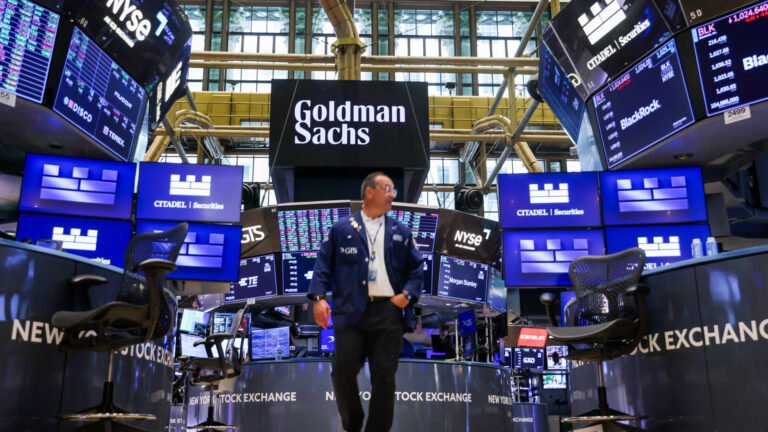


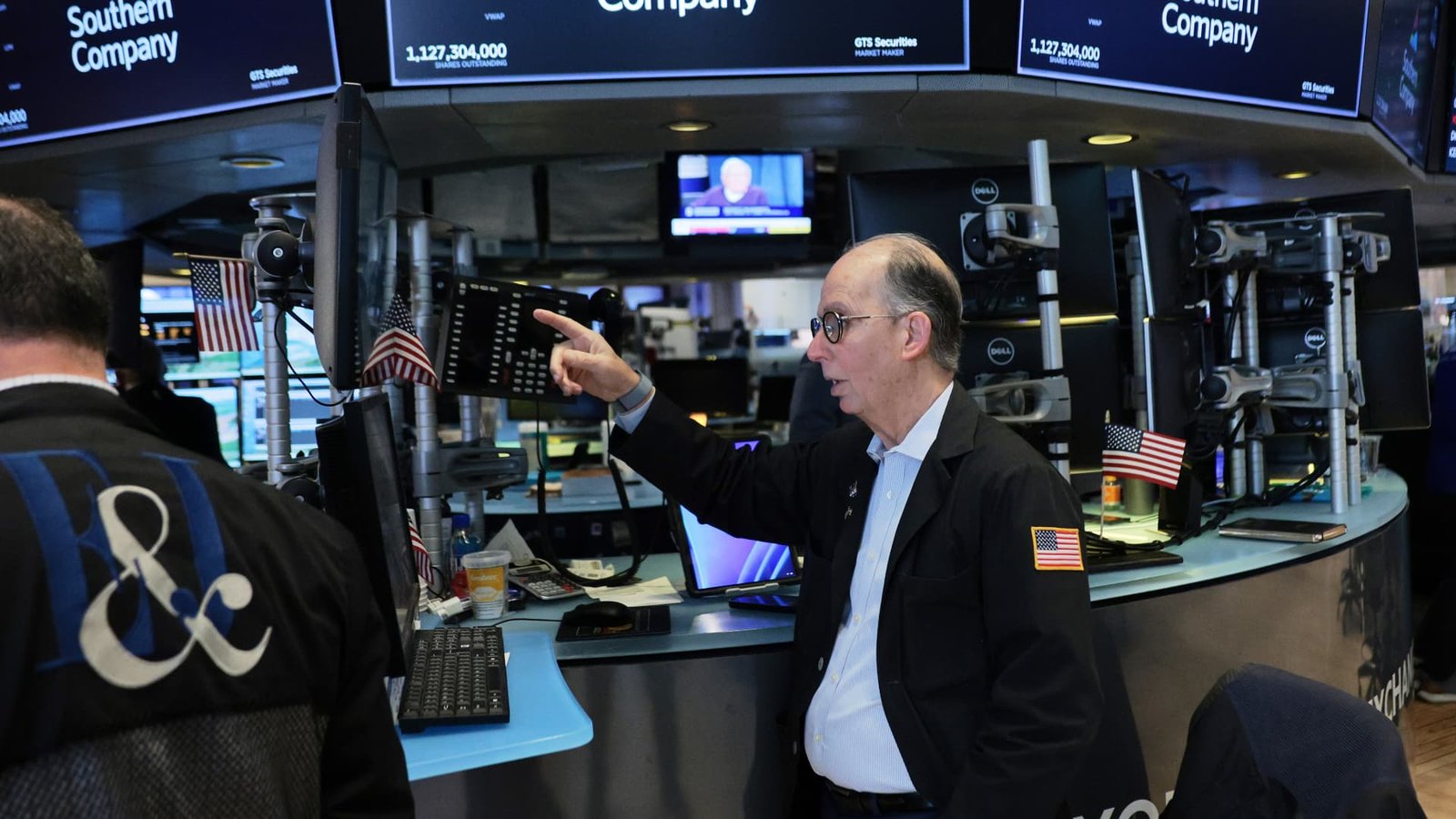
Traders work on the floor of the New York Stock Exchange during morning trading on May 4, 2026 in New York City.
Michael M. Santiago | Getty Images
The S&P 500 brushed off Thursday headlines about the U.S. and Iran trading blows in the Strait of Hormuz and continued marching higher in Friday trading, crossing 7,400 for the first time. Prediction market traders think there’s more fuel left in the tank.
While the benchmark is already up more than 16% from its March 30 lows, traders on Kalshi think the broad index has a 59% chance of breaching 8,000 this year. That’s an 8% gain from current trading levels, and the index only crossed 7,000 for the first time in January.
It’s not just traders on prediction markets getting more bullish. RBC hiked its 12-month-forward price target for the index to 7,900 in a Friday note. Head of U.S. equity strategy Lori Calvasina wrote that the average and median of the five models used by the bank to calculate its estimate is 8,100 — implying there may be even upside to her forecast.
Stocks have shrugged off what appears to be a prolonged closure of the Strait of Hormuz — a critical passageway for the global supply of crude oil — and a potential re-escalation of the U.S.-Iran war.
Investors instead have embraced an artificial intelligence buildout that appears to be firing on all cylinders. It’s boosting stocks of the companies involved, driving much of the earnings growth the market has been celebrating and pushing GDP higher through increased private investment.
“The AI tech trade has just become so powerful that it’s superseded anything else,” said Peter Boockvar, chief investment officer at OnePoint BFG Wealth Partners. He added that no one wants to miss out on a potential rally if the U.S. and Iran do finalize a peace agreement — even though stocks have rallied so much since the ceasefire announcement. “Momentum has a life of its own.”
Truist Wealth chief investment officer Keith Lerner said that the market’s sharp move higher needs to be put in the context of what happened before the war, when major U.S. indexes traded in a narrow range from late October until March. Current levels in comparison to levels the S&P first hit in October are closer to around 7% higher.
S&P 500 since Oct. 1, 2025.
Boockvar added that Iran remains a risk, despite the indexes not showing it. He said weakness in some consumer-facing names display that there is some isolated pain in the economy that could be a risk to the broader market.
Lerner agreed that Iran isn’t gone as a worry for the market, but the bar is high now for it to ruin the rally, and likely would have to mean oil prices breaching their highs from back in late March.
“It has to come back in a way that’s meaningful, otherwise people are just going to buy the market pretty quickly,” he said.
Disclosure: CNBC and Kalshi have a commercial relationship that includes customer acquisition and a minority investment.
Markets shift and headlines fade, but the core principles of building long-term wealth remain constant. Join us for our third CNBC Pro LIVE, where investors of all backgrounds – from financial professionals to everyday individuals – come together to cut through the noise and gain actionable strategies for smarter, more disciplined investing. No matter where you’re starting from, you’ll leave with clearer thinking, stronger strategies. Enter your email here to get a discount code