

A supporter checks the gambling site ‘Kalshi” just before State Assembly member, Alex Bores (D-NY) gives a speech to supporters at his watch party at The Freehand Hotel after conceding the congressional race to Micah Lasher who will replace Rep Jerry Nadler (D-NY) in NY’s 12th Congressional District on June 23, 2026 in New York City.
Laura Brett | Getty Images
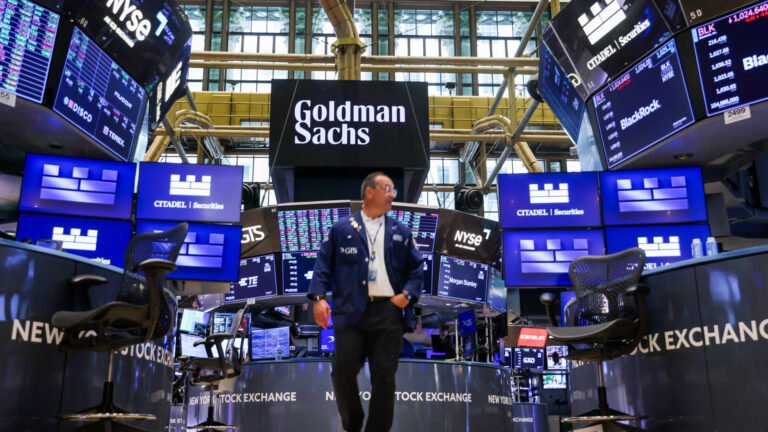
Insider trading is an emerging risk in the new world of prediction markets, and some companies – including Goldman Sachs – are taking steps to limit employees’ trades on the platforms.
Goldman Sachs has banned its employees from trading on contracts related to events that are specific to the bank, as well as elections, financial markets, macroeconomic data and geopolitics, according to people familiar with the matter.
A representative for Goldman declined to comment on the policy, but did state that the bank prohibits using material, nonpublic information to trade across all markets.
While some firms have started developing policies to managing insider trading risks on prediction markets, many others have yet to take those first steps, legal experts say.
“We are getting constant questions from clients, particularly among regulated entity clients, about what the regulator expectations are, what the risks are, where the areas of potential liability are,” said David Oliwenstein, a partner and securities enforcement practice lead at Pillsbury.
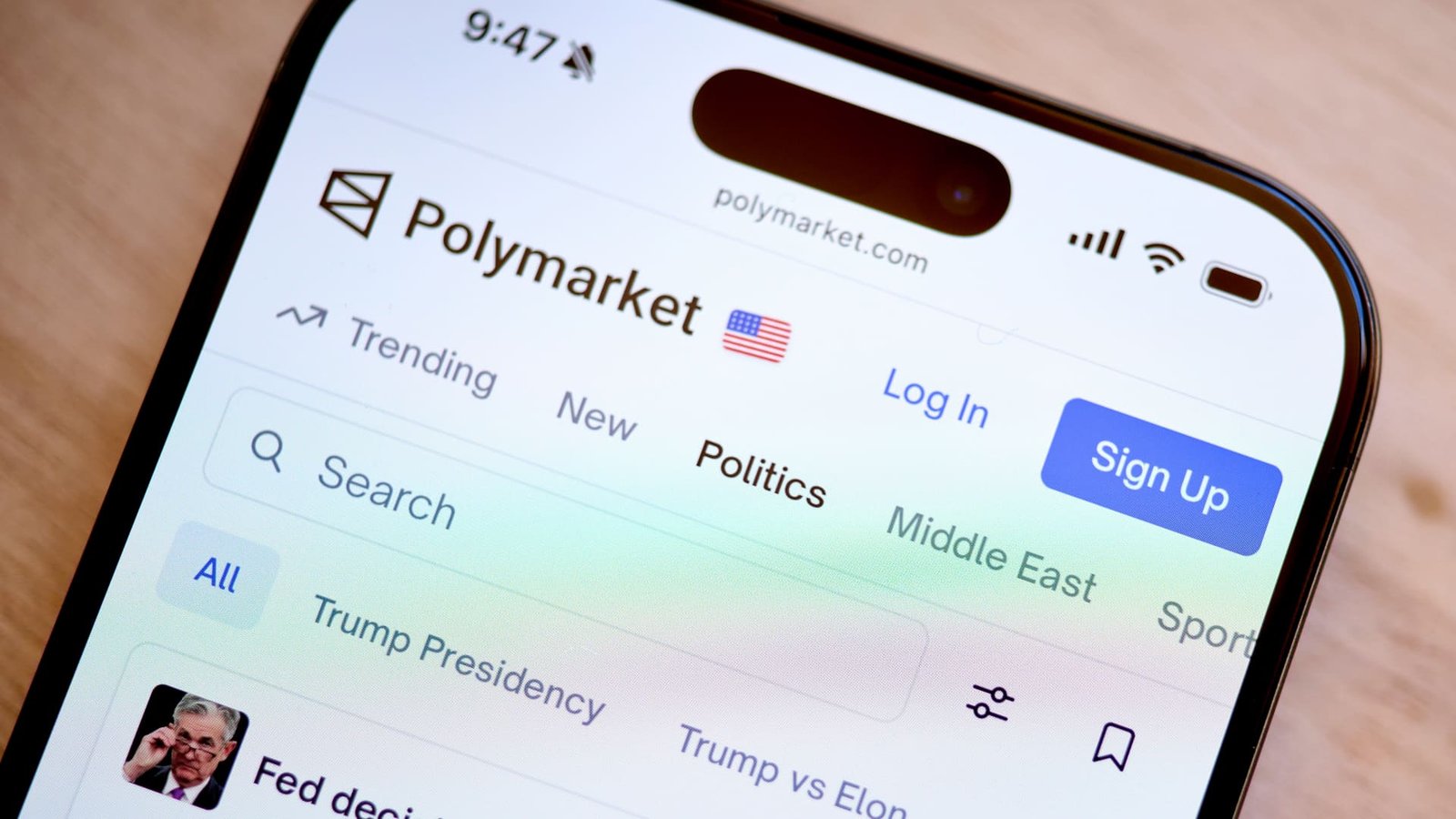
The Polymarket website on a smartphone arranged in Germantown, New York, US, on Tuesday, July 22, 2025.
Gabby Jones | Bloomberg | Getty Images
The news of an explicit prediction market trading directive at Goldman comes after the first event contract insider-trading case to involve a private sector company.
In May, the Commodity Futures Trading Commission and Department of Justice charged Google employee Michele Spagnuolo with using material, nonpublic information to trade on Polymarket contracts related to the browser’s “Year in Search” lists. Using the handle “AlphaRaccoon,” Spagnuolo allegedly collected about $1.2 million in profit, according to the CFTC’s complaint.
Legal experts said the sheer number of contracts available on prediction platforms may provide new avenues for material, nonpublic information to be used to turn a profit. For example, a Google employee could use internal data to trade on contracts about what the company’s headcount will be this year, when it may release a new version of its Gemini AI tool or where Alphabet’s share price will end the month.
A Polymarket advertisement in a subway station in New York, US, on Thursday, Feb. 5, 2026.
Michael Nagle | Bloomberg | Getty Images
“All these different questions that you’re able to bet on… it makes it really hard to kind of play whack-a-mole in terms of where people are using the information they’ve obtained confidentially,” said Karen Woody, law professor at Washington and Lee University.
Lawyers told CNBC that as more insider trading on these platforms is caught and prosecuted, there will be greater expectations that businesses have sufficient policies and education to avoid any potential liability in a case involving one of their employees.
But lawyers also said they’re advising clients it’s nowhere near late, and companies should take this time now to develop the necessary policies.
Where companies stand
CNBC reached out to 50 publicly traded and privately held companies, which all have contracts regarding details about their businesses on prediction market platforms.
In total, only three revealed they have policies related to trading on prediction markets, while another two said it was something they were actively reviewing.
United Airlines told CNBC it does not have an explicit policy on prediction market trading, but that its employee guidelines “prohibit using your position (or company confidential information gained from your position) for your personal gain.”
A spokesperson for JPMorgan Chase confirmed a Barron’s report that employees are urged to proceed with caution when trading on prediction markets — particularly on contracts related to the financial sector.
At Morgan Stanley, a spokesperson said the bank has policies regarding trading on prediction markets in its employee code of conduct, but did not disclose further details.
Exterior view of a Bank of America branch on March 30, 2026 in Hanover, Maryland.
Heather Diehl | Getty Images
A person familiar with Bank of America’s plans told CNBC that the company was in the process of communicating updates to policy that will outline prohibited activities for employees and provide examples to help clarify expectations for trading on prediction market platforms. The person didn’t provide details about the specific changes to policy itself.
Banks appeared to be the sector most likely to respond that they were developing prediction market trading policies or already had one in place.
“Financial institutions, they have huge compliance departments,” said Lara Shortz, a partner at Michelman & Robinson in its labor and employment practice. “They spend a lot of time putting together policies related to trading and the use of information.”
Overall, 36 companies — including from sectors beyond just banks — did not respond to inquiries from CNBC regarding their prediction market trading policies for employees. Another seven declined to comment on the matter.
While CNBC cannot conclude exactly what these businesses that did not respond are doing, it matches what lawyers who work with companies on internal policy matters said: just a few companies have undertaken major policy changes so far, while many others are still in the early stages of any form of updates during the platform’s new, explosive rise.
“Right now, training is not necessarily the gold standard, just because it is new,” said Marissa Mastroianni, an employment law attorney at Cole Schotz.
What’s already on the books
Traders work on the floor of the New York Stock Exchange during morning trading on June 26, 2026 in New York City.
Michael M. Santiago | Getty Images
Some legal experts and company representatives argued that broad directives that ban insider trading inherently apply to prediction markets, too. A person familiar with OpenAI’s employee policies said that the company’s blanket insider trading policy is clear that staff cannot use material, nonpublic information in any way.
But Tiffany Magri, a regulatory advisor at compliance technology company Smarsh, said companies benefit from explicitly mentioning prediction markets in their policies.
“The question is no longer whether exchanges can detect suspicious trades,” she said. “It’s whether employers have established clear expectations around when employees should be prohibited from participating in markets tied to information they encounter through their work.”
To Magri’s point, leading prediction market platforms Kalshi and Polymarket have taken steps on their own to crack down on insider trading.
Kalshi, in early June, announced new employment verification tools for participants on some prediction markets. That same month, it partnered with StarCompliance to allow employers with the partner’s software to access their employees’ event contract trades. To beef up its own internal oversight, the exchange partnered with Solidus Labs, a market integrity company, in February.
A Kalshi advertisement on a Metro train in Washington, DC, US, on Wednesday, June 17, 2026.
Daniel Heuer | Bloomberg | Getty Images
Polymarket highlighted its own partnerships in a statement to CNBC. Those include one with Chainalysis — an on-chain market enforcement company — and another with Palantir to monitor suspicious activity on its sports-related contracts.
But Magri noted these are just first steps, and that companies need to start training employees about the platforms rather than rely on the exchanges themselves to stop insider trading.
Both Kalshi and Polymarket declined to comment if they’re working with companies directly as they develop internal oversight and enforcement mechanisms.
Early days, growing urgency
Companies and the CFTC are jumping into new territory when confronting insider information on prediction markets.
On the prosecution front, Woody said the CFTC has a “blank canvas” on how it will go after insider trading. “I think what’s going to be interesting with the CFTC taking the lead here is that there aren’t a lot of cases to date yet in this space. It’s fairly new,” she said.
The CFTC did not respond to a request from CNBC to comment on whether it foresees companies becoming liable in the future for insider trading from their employees if they are deemed to have failed in educating them enough about it.
With lingering uncertainty on the regulatory side, companies should take the lead in rulemaking and learn how prediction markets work, said John Sullivan, professor of management at San Francisco State University.
Elevated view of staff working in a busy open plan office
monkeybusinessimages | iStock | Getty Images
Lawyers from King & Spalding LLP outlined steps companies can take in an article on Law360. Those include updating their insider trading policies to include event contracts and establishing protocols to monitor unusual activity on individual markets related to their businesses.
For even stricter measures, Sullivan told CNBC businesses should consider banning the platforms on company-owned devices and prevent employees from trading during work hours.
The foolish move would be to dismiss prediction markets’ relevance, he said. “It’s embarrassing not to have done anything or not to know about it.”
— CNBC’s Ashley Capoot contributed reporting
Disclosure: CNBC and Kalshi have a commercial relationship that includes customer acquisition and a minority investment.