




The latest tech sell-off underscores that it’s still a different game for investing in China versus the U.S. “The U.S. decline was primarily triggered by earnings miss[es] from some market leaders, but in China it was mainly sentiment spillover plus portfolio adjustment/rotation,” said Ding Wenjie, investment strategist for global capital investment at China Asset Management Co. “For the chip and AI sector, the long-term drivers of both domestic substitution and global AI computing demand remains intact,” she said, adding that, “besides chips, China’s electrical and grid equipment companies and materials sector will also benefit from the AI capex cycle.” Following last week’s U.S. tech stock plunge, China’s tech giants tumbled in Hong Kong trading, sending the sector index into a bear market . Chip companies Hua Hong Semiconductor and SMIC were among the biggest losers over the last five trading days with losses of nearly 15% and around 10%, respectively. Short video and artificial intelligence video generation company Kuaishou fell by 11% during the same time period. Tencent lost around 9.5%, and Alibaba fell more than 8% in Hong Kong over the last five trading days. But that didn’t stop mainland China-based investors from pouring into Tencent and Alibaba, the top two Hong Kong stocks by net mainland investor buying on Wednesday and Thursday, according to Wind Information data available as of Friday afternoon. It all comes down to a significant gap in valuations. “The recent volatility in China’s tech sector, particularly in the Hong Kong market, has more to do with spillover sentiment from weakness in Wall Street,” said Brian Tycangco, an analyst at Stansberry Research. In his view, “China’s markets have basically only just begun their bull phase. Valuation multiples have not had the opportunity yet to expand to a degree that would warrant concern even in the AI and chip-related sectors,” Tycangco said. He pointed out that the KraneShares CSI China Internet ETF (KWEB) still trades at 16 times its price-to-earnings ratio, while the mainland China tech innovation-focused KraneShares SSE STAR Market 50 Index ETF (KSTR) trades at 45 times. “That’s not very high considering the expected growth rate of the AI market in China, which is more than doubling every three years,” Tycangco said. Top performers in the STAR 50 Index over the past five trading days included semiconductor materials company SICC, vacuum robot company Roborock, AI industrial automation company Supcon and smartphone maker Transsion. That’s excluding solar-related names that climbed amid reports of possible new business deals tied to Elon Musk. “China and Hong Kong [stocks] enter 2026 from a position of low expectations. Valuations reflect significant pessimism,” Singapore-based Raffles Family Office said in its 2026 investment outlook released last week. “Despite macro softness, China’s digital economy and AI ecosystem continue to expand rapidly. Notably, earnings expectations in the technology sector have remained stable, and valuations are significantly more attractive versus global peers,” said the firm, whose private equity arm disclosed stakes in Anthropic and SpaceX. “Against this dynamic landscape, we remain constructive on global equities, with a continued preference for the United States and selective opportunities in China/Hong Kong where policy alignment and innovation trends present pockets of strength,” the report said. Its asset allocation strategy for 2026 showed increased exposure to China and Hong Kong stocks, while reduced U.S. large-cap holdings. While investor concerns about excessive valuations in U.S. AI have built up for months, Chinese AI developments emphasize how local businesses are not only using the tech differently, but also charging far less for it . Chinese companies are also far more focused on using AI for consumer-facing applications , even as Beijing pushes for local AI chip and infrastructure development. In the latest sign of a pivot toward home-grown technology, robotaxi operator Pony.AI closed about 0.4% higher in Hong Kong trading Friday after announcing a partnership with chip maker Moore Threads for developing autonomous driving technology. Moore Threads, which went public on Shanghai’s Star board in December , closed about half a percent higher.
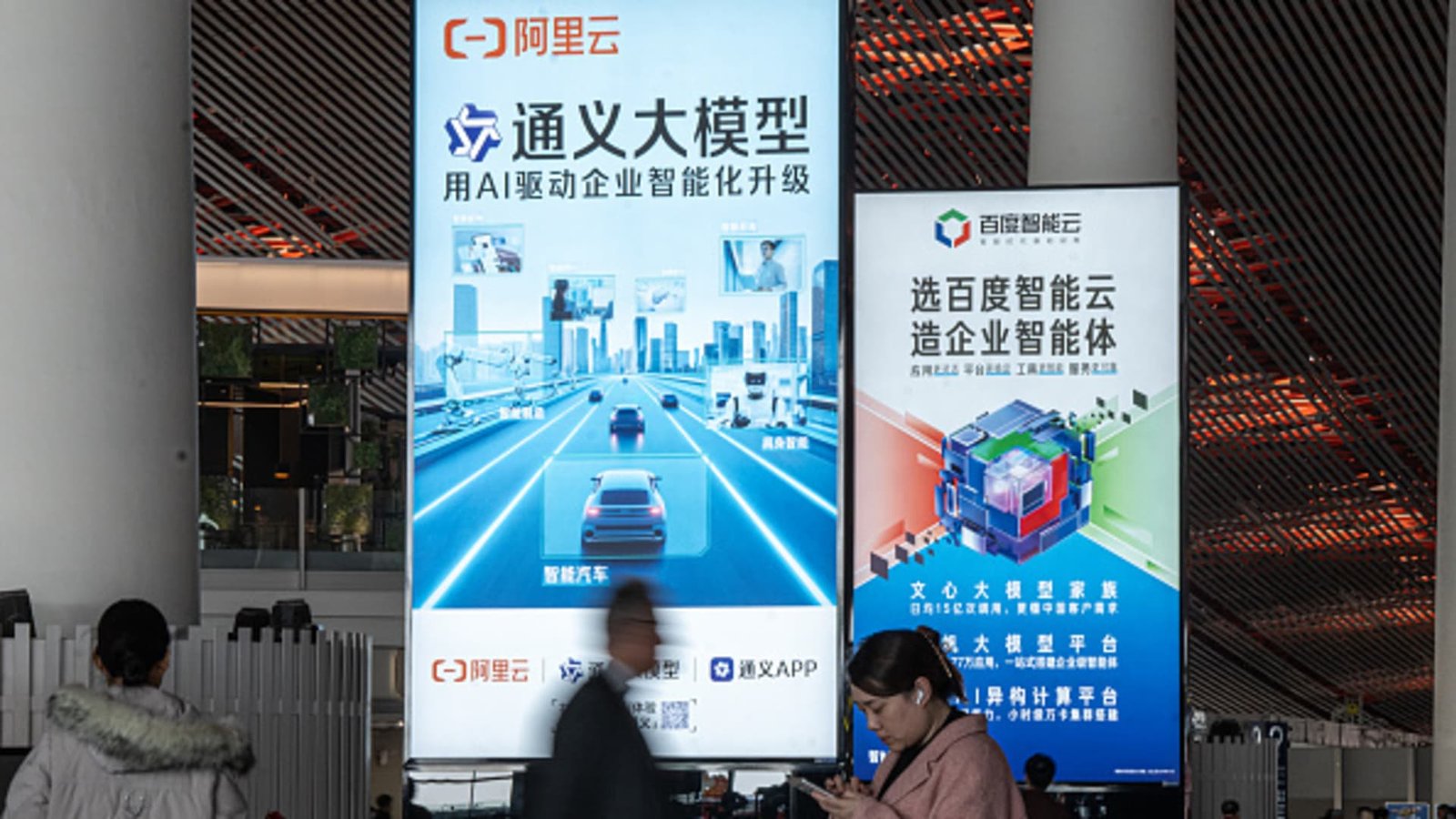
Tech giants in China sold off alongside their U.S. peers. How to play it
You May Also Like



More From Author

China’s Luckin Coffee opens its first high-end store